
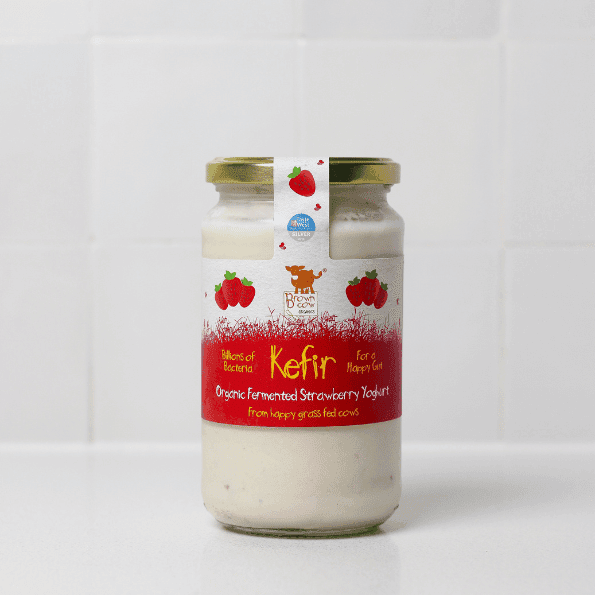
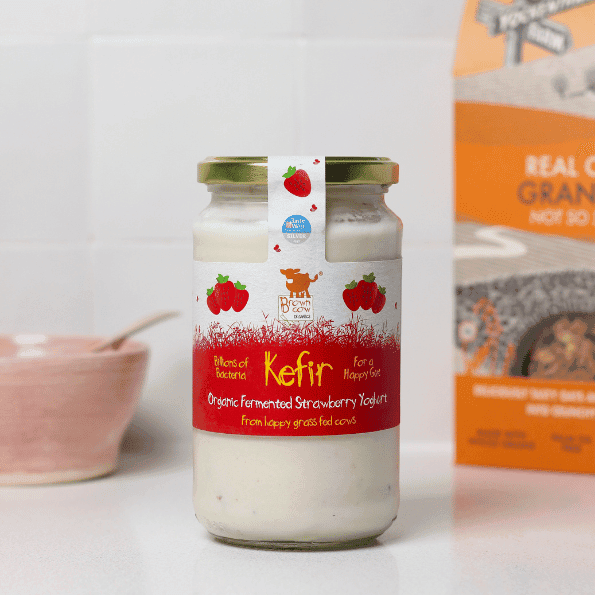
Organic Strawberry Kefir Yoghurt
Organic Strawberry Kefir Yoghurt

British

Organic

Regenerative Agriculture

Recyclable Packaging
Frequently Asked Questions
Brown Cow Organics is a UK-based organic farm known for producing high-quality dairy products, particularly organic kefir and yoghurts. Located at Perridge Farm in Somerset, they follow sustainable farming practices that focus on organic methods and animal welfare. Their cows are grass-fed and pasture-raised, contributing to the farm's eco-friendly and ethical ethos.The farm is also renowned for its commitment to sustainability. They use eco-friendly packaging, such as recyclable glass jars, and have integrated Woolcool, a biodegradable wool insulation, for their chilled deliveries. This aligns with their goal of reducing environmental impact while providing fresh, healthy, and organic products.Their range includes organic live yoghurts, kefir, and even organic beef, all delivered through local milk rounds across the UK. Brown Cow Organics is a family-run operation that emphasises transparency, quality, and care for both the environment and animal welfare.
Brown Cow Organics uses eco-friendly packaging for their kefir and other products. Their kefir is delivered in fully recyclable glass jars, which customers can reuse at home. They also focus on sustainable farming and packaging practices, using materials like Woolcool, an eco-friendly insulated packaging made from British wool, to keep their products fresh during delivery.
Kefir is a fermented drink made by adding kefir grains to milk. These grains aren't actual grains like wheat; they're a combination of yeast and bacteria that create a probiotic-rich beverage.
Kefir has a tangy, slightly sour taste, similar to a thinner, drinkable yoghurt. It's packed with beneficial probiotics, which support gut health by promoting a healthy balance of bacteria in the digestive system. Kefir is also a good source of protein, calcium and vitamins, particularly B vitamins and vitamin D.
Kefir is not completely lactose-free, but it is much lower in lactose compared to regular milk. This is because the fermentation process involved in making kefir breaks down most of the lactose, the sugar in milk that can be difficult for some people to digest.The probiotics in kefir, particularly *Lactobacillus*, help digest lactose, making it easier for those with lactose intolerance to tolerate. However, trace amounts of lactose still remain, so if you're highly sensitive or allergic to lactose, you may want to opt for water kefir or lactose-free versions.
Some sources suggest starting with around 100ml, to allow your body to adjust to the influx of probiotics. Gradually increasing your intake is often recommended to avoid any potential digestive discomfort, such as bloating.However, individual tolerance can vary, so it's best to listen to your body and adjust as needed. If you have specific health concerns, it’s a good idea to consult with a healthcare professional.
Kefir can potentially help with acid reflux due to its probiotic content, which promotes gut health and balances stomach acidity.